
A panel replacement is a useful time to consider what your home may need next. Before work begins, make a list of planned changes: an EV charger, heat pump, electric water heater, cooking equipment, or an addition. Include equipment you expect to install later, even if you are only replacing the panel now. ENERGY STAR recommends planning wiring around future electric appliances and charging needs.
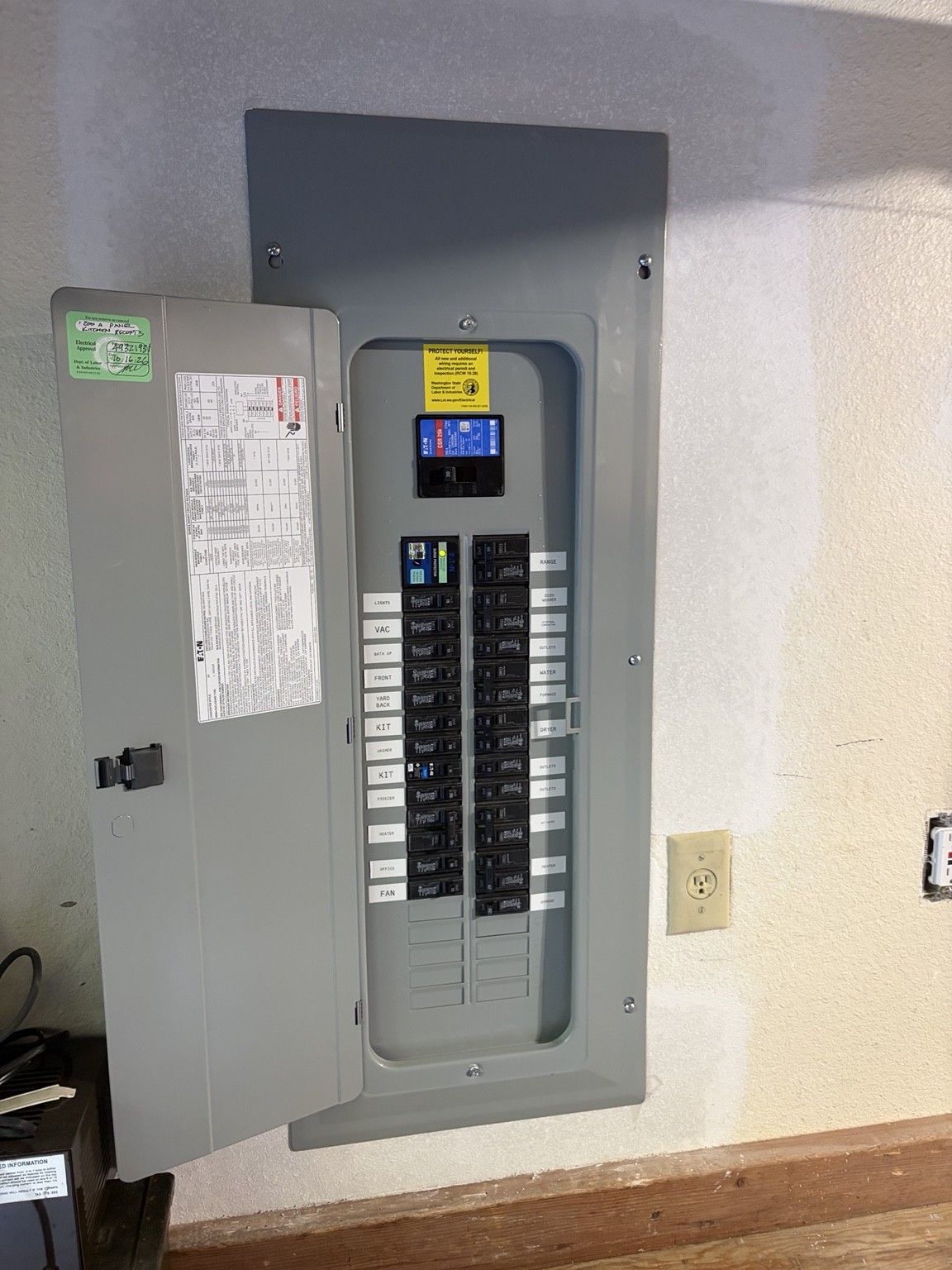
Panel space and service capacity are different questions
Does the panel have room for the circuits you need? Does the existing electrical service have enough capacity for the loads you plan to add? Replacing a panel alone does not necessarily increase the capacity coming into the home. For Seattle City Light customers, a load study considers existing equipment, proposed equipment, and property details to determine whether the current service can support added loads. That planning approach is useful throughout King County, although utility requirements vary by address.
Review the complete plan before choosing equipment
Ask an electrician to review equipment specifications and future plans before choosing a panel or service size. Energy management may be worth discussing where several large loads are planned. ENERGY STAR describes smart panels that can pause a lower-priority load, such as EV charging, when other equipment needs power. Whether that approach fits a particular home requires a project-specific assessment.
Confirm permits and inspection
Confirm who will obtain the electrical permit and arrange inspection. Washington L&I says most electrical work requires both, with the issuing jurisdiction depending on the address.
A useful starting point is to bring your electrician a list of current equipment, planned additions, and when you expect to install them. That makes it easier to compare a panel replacement, load management, and a full service upgrade for your home.