
When you upgrade an electrical panel, add circuits, or wire a remodel, permits and inspections are an important part of the job. They provide a process for checking that the installation meets applicable electrical safety requirements—and create a record of the improvements made to your home.
For homeowners in Seattle, Bellevue, and surrounding communities, understanding that process can make an electrical project easier to plan.
When does electrical work need a permit?
Washington generally requires electrical permits and inspections for electrical installations and alterations, with specific exceptions for certain repairs and replacements. Common projects requiring permits include panel and service upgrades, new circuits, and wiring additions.
Do not assume that a small job is automatically exempt. Confirm the requirements with the authority responsible for your property before work begins.
If you hire an electrical contractor, the contractor must obtain the permit for the work they perform. Homeowner permits are intended for qualifying owners doing their own work; they should not be used to cover a hired contractor’s installation.
Where do you get the permit?
The permit must come from the agency responsible for electrical inspections at the project address.
- Seattle: Electrical permits are handled by the Seattle Department of Construction and Inspections through the Seattle Services Portal.
- Bellevue: Electrical permit applications are submitted through MyBuildingPermit.com, with Bellevue handling review and inspections.
- Other communities: Some cities operate their own electrical inspection programs. In areas under Washington State Department of Labor & Industries jurisdiction, electrical permits and inspections go through L&I. Tacoma Power also has a separate electrical inspection jurisdiction.
A city’s website or mailing address alone does not determine the correct agency. Confirm the property’s actual jurisdiction before applying.
How long does a permit take?
Many straightforward electrical permits do not require plan review. Seattle issues many electrical permits the same day an online application is submitted, and Bellevue states that electrical permits without plan review can also be issued the same day.
Projects requiring plan review take longer. Incomplete applications, missing documents, and corrections can also affect timing. A quick permit does not mean that utility scheduling or the entire project can be completed immediately.
Contractor licensing is another item to check early. Seattle and Bellevue have local business licensing requirements in addition to applicable state requirements. If a contractor needs a new local license or registration, that process can add preparation time. Requirements vary by city.
What can trigger electrical plan review?
Plan review means the permitting agency checks electrical drawings and supporting information before authorizing the work. Requirements differ by jurisdiction; there is no single Greater Seattle rule.
Seattle: The city’s permit portal lists services of 400 amps or more, solar photovoltaic systems over 12 kW, and energy storage systems as plan-review triggers. Confirm the requirements for the specific installation before choosing a permit type.
Bellevue: Examples include new nonresidential buildings, new multifamily buildings with three or more units, installations or alterations over 2,500 square feet, solar systems, hazardous locations, and complex designs. Certain work involving equipment rated 100 amps or more in nonresidential, multifamily, and mixed-use buildings also requires review. That is not a blanket rule for single-family panel upgrades.
L&I: In its jurisdiction, plan review applies to specified new or altered electrical installations in educational, institutional, and health-care occupancies, subject to exclusions.
The agency may request load calculations, electrical diagrams, panel schedules, or equipment information. Confirm the required documents early so missing information does not delay the project. Electrical plan review and utility engineering review are separate processes.
How the permit and inspection process works
1. Define the work. Identify the equipment, circuits, and other changes included in the project. The permit application should accurately describe the installation.
2. Apply and pay the required fees. Submit the application to the correct agency, including plans or supporting documents when required. Obtain the permit before beginning work that requires it.
3. Complete the installation and request inspections. Depending on the project, inspections may be needed at several stages. Wiring that requires inspection must remain accessible until approved; do not cover it with drywall, insulation, or backfill prematurely.
4. Address any corrections. If the inspector identifies a problem, the contractor must correct it and arrange any required reinspection. Changes to the project may also require updates to the permit.
5. Obtain final approval. Finishing the physical installation does not complete the permit process. Required final inspections must pass, and the permit record should show the appropriate completed status. Keep the permit number and inspection results with your home records.
Permit and inspection fees vary by agency and project. Additional review, changed scope, or reinspections may create extra charges. Ask what is included rather than assuming every inspection is free.
Why inspections matter for your home
Electrical inspections provide an independent check of the permitted installation against applicable safety requirements. They can identify issues that need correction before the project is approved.
Passing inspection is not a guarantee that every part of an existing home’s electrical system is defect-free. It does provide useful documentation that the permitted work received the required review.
Inspection approvals from our projects
These photos show actual inspection approval stickers from Shudko Electric projects.
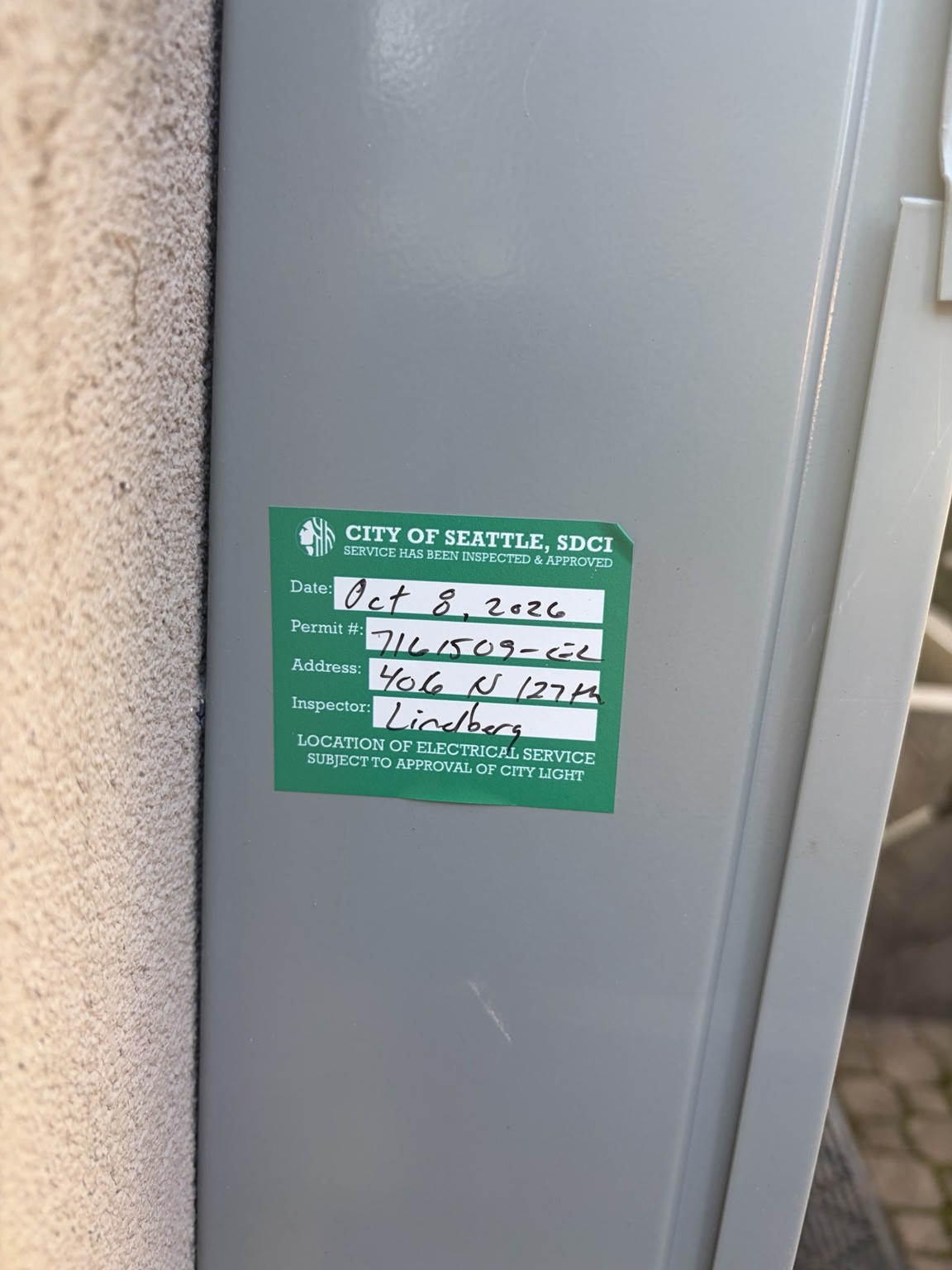
Cary’s Seattle meter separation: SDCI electrical service approval dated October 8, 2026. This sticker documents service approval; the project page also describes utility inspection and reconnection.
See Cary’s meter-separation project
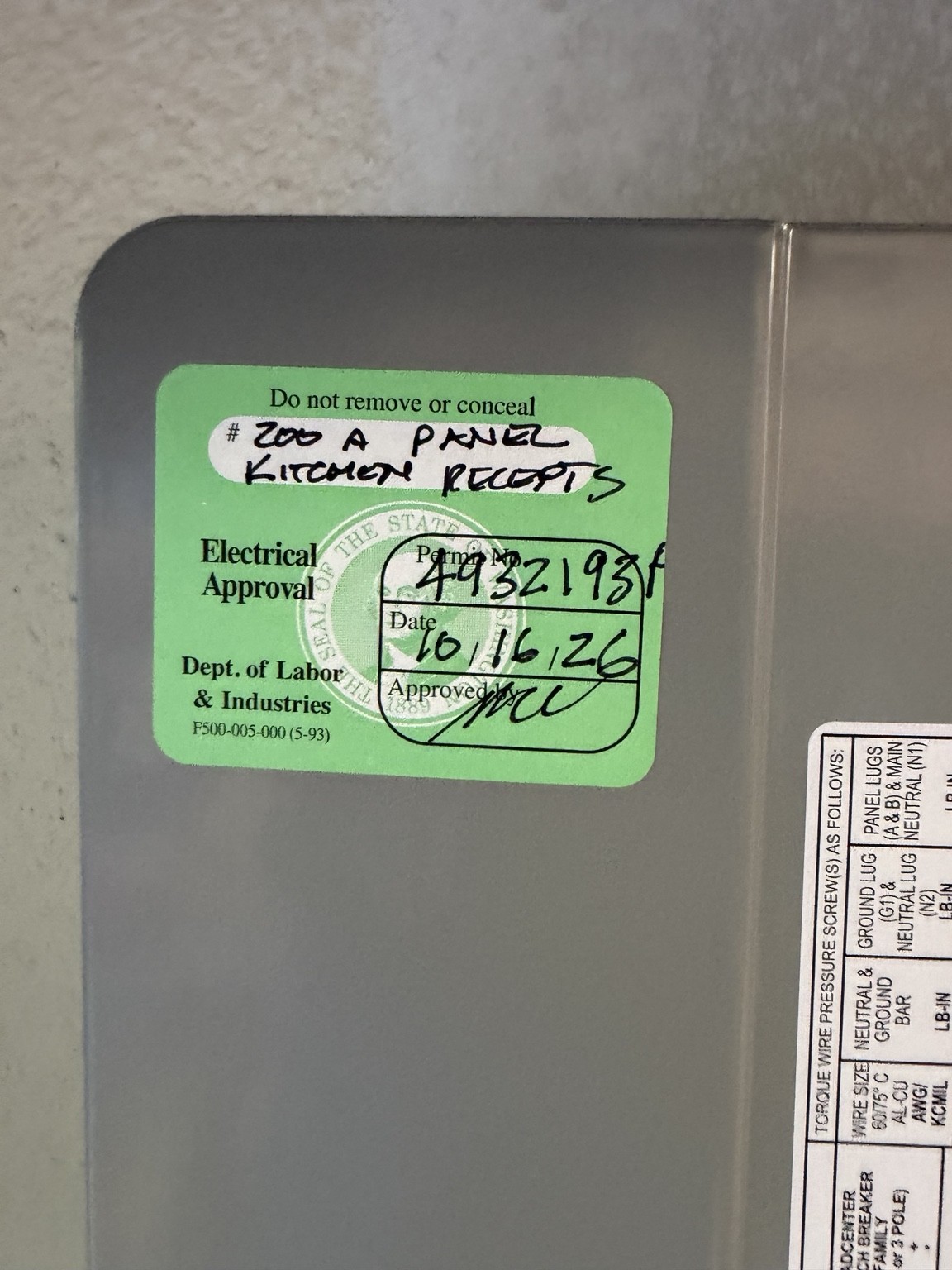
James’s Shoreline panel upgrade: Washington L&I electrical approval dated October 16, 2026.
See James’s Shoreline panel upgrade
How permits can help when you sell
A buyer may ask who completed a panel upgrade, whether permits were obtained, and whether inspections passed. Keeping those records makes the questions easier to answer.
Documented, inspected improvements can help buyers feel more comfortable and may reduce uncertainty during a sale. Permits do not guarantee a faster sale or a higher price, but they give future owners a clearer history of the work.
Explore our Seattle electrical services and Bellevue panel and service upgrades for local project examples.
Ready to start your electrical project?
Tell Shudko Electric about your property and the work you are planning. We can discuss the installation, applicable permitting requirements, and inspection coordination.
Start Permitting Your Project →
This opens our short request form. Submitting a request does not issue a permit or book an appointment.